
.jpg)
History and Culture
Soup is a staple at tables around the world and, thanks to its unlimited potential for creativity, additions, and seasoning, it can be prepared as a broth, a cream, or thick, as many of us enjoy it. Because it is such a well-known and celebrated dish, it is always present on the menus of the most renowned cookbooks in the world.
Although some have argued that its origin is uncertain, the book Sopas (2020) notes that the history of soup dates back to the Paleolithic, more than 25,000 years ago, when vegetables and pieces of meat were submerged in hot water to soften raw foods, using natural utensils and adding hot stones to help with cooking. Over time, the addition of different ingredients and seasonings enriched the flavors and textures of broths, shaping what we know as soups.
The great soups of Western cuisine began to appear from the 16th century onward, when Kings Francis I and Henry IV of France included in their pleasures potages, made with different boiled, heavily seasoned game meats. In time, different cultures incorporated the foods available in their territories, giving rise to deeply rooted dishes.
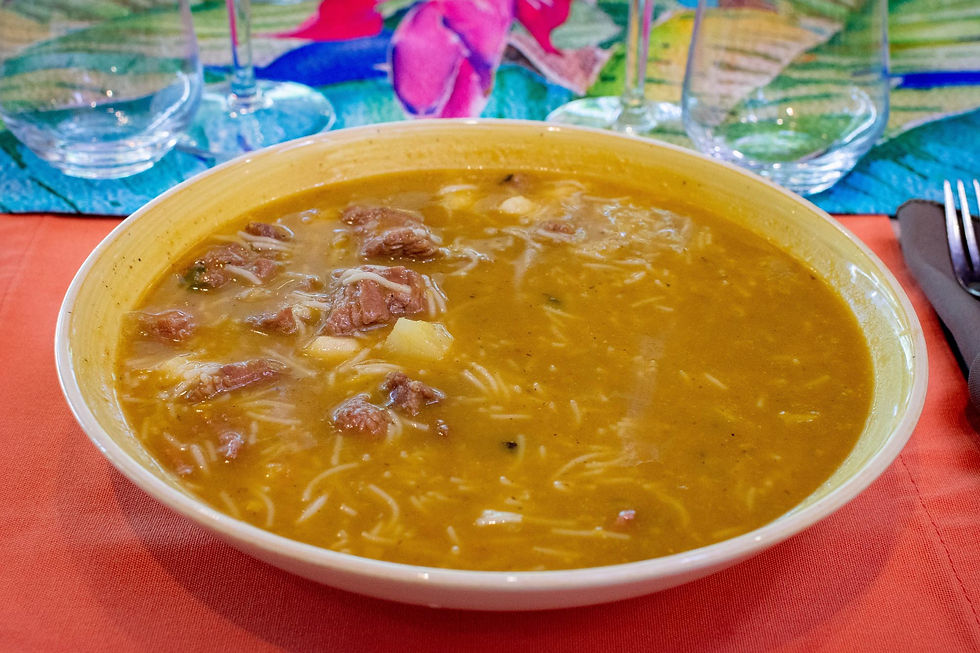
Soups play a predominant role in our culture and in the daily menu, serving as an excellent prelude to a main course or, in many cases, as the main dish on their own. As for beef soup, this dish appears in the book Comidas Tipicas Dominicanas (1965), by Dominican culinary master Ligia Vidal de Bornia, who describes its preparation as follows: "Clean, wash, and cut the meats into small pieces in a large paila and put the meats with water, seasoning, recado verde, corn, and squash. Cover and let it boil for two hours over medium heat. Strain and add the corn, potatoes, cassava, and noodles. Let it boil until they are tender. Adjust the salt and vinegar."
Without a doubt, beef soup has a historical connection to the legacy of Spanish and African cuisine. Like other dishes, it has been enriched and transformed over time, adopting flavors and preparation methods adapted to our context, or, as researchers point out, the dish has been creolized.

Thin noodles
113 g

Celery
56 g

Carrot
500 g

Beef
1 kg

Pepper
1 pinch
Optional.

Cubanelle chili
1 unit

Bitter orange
To taste.

Pumpkin
500 g

Water
3 liters

Cilantro
2 sprig.

Ground salt
1 tbsp.
Adjust to taste.

Oregano
14 g

White onion
-
-

Potatoes
500 g

Garlic
2 cloves.
Ingredients
Recipe and Preparation
PREPARATION
Gather all the ingredients and utensils to be used.
Wash and sterilize the vegetables.
Cut the meat into cubes of about 5 cm (2 inches). Rinse and let drain.
Peel the garlic and crush it in a pilon (mortar) or mince it.
Squeeze the oranges.
Season the meat with the garlic, ground oregano, part of the orange juice, and salt.
Let it rest for about 10 minutes.
PREPARE THE VEGETABLES
Wash and clean the pepper, removing the seeds and the white part.
Peel the potatoes and carrots. Dice them, rinse, and set aside.
Peel the squash (auyama). Cut into pieces of about 2.5 cm (1 inch), rinse, and set aside.
Wash and cut the celery into pieces of about 1 cm.
Peel and dice the onion (brunoise).
BOIL THE SOUP
Place the seasoned meat in a pot along with the pepper, onion, celery, squash, and 1/3 of the potatoes. Cover with water and bring to a boil.
Once the meat is tender, remove from the heat. Separate the meat from the vegetables and set aside.
Blend the cooked vegetables and strain to obtain a cream.
Return the meat to the pot along with the vegetable cream. Bring back to the heat.
Add the remaining potatoes, carrots, and an extra sprig of cilantro. Cook until the vegetables are tender (about 10 minutes).
Stir occasionally and skim off foam during cooking.
Taste and adjust salt to taste.
Remove from the heat. The soup should have a creamy texture, but not thick.
Add a teaspoon of sour orange juice before serving.
Where to eat this dish

Restaurante Casa Lucía
Madrid, ES
No establishments to show at the moment.
Comments
There are no comments yet...
-